Are There Different Sizes of Torque Wrenches?
In industrial maintenance, construction, and precision engineering, using the right tool is vital for the integrity of every bolt and connection. Many professionals often wonder if manual torque wrenches, Hydraulic Torque Wrenches, or electric torque wrenches come in different sizes. The answer is yes, and choosing the correct size is the most important step in ensuring your project meets safety requirements and operates with high efficiency.
Because different bolts require different amounts of force—known as torque—manufacturers create tools in various physical and capacity sizes. Understanding how these sizes relate to your specific application helps you select the right equipment to get the job done correctly and safely.
Understanding Torque Wrench Sizes and Capacities
Torque wrenches are categorized by two main "sizes": the physical size of the drive and the force capacity of the tool.
Drive Size vs. Capacity
The most common way to talk about torque wrench size is the square drive, which connects the tool to the socket. Common drive sizes include 1/4", 3/8", 1/2", 3/4", and 1 inch. While the drive size tells you what socket will fit, the "capacity" tells you how much force the tool can apply. For example, a 1/2" drive wrench might be available in a capacity of 20 to 150 Nm, while a massive 1" drive Hydraulic torque wrench might handle thousands of Newton-meters. Saivs designs these tools with specific ranges so that you can always find a match for your fastener requirements.
Why Matching Size to the Task Matters
If you try to use a tiny 1/4" drive wrench for a large structural bolt, you will likely break the tool because the bolt requires more force than the small internal components can handle. Conversely, if you use a giant 1" drive wrench for a small, delicate bolt, you might accidentally snap the bolt head off because the tool is too powerful. Matching the physical size and the torque capacity to the specific fastener is the foundation of professional bolting practice. It ensures that the tool is operating within its optimal, accurate range.
Standardized Dimensions for Industrial Compatibility
Torque tools follow international standards, meaning that a 1/2" drive socket from one set will usually fit a 1/2" drive torque wrench from another. This standardization allows professionals to build a versatile toolkit. Saivs ensures that its product range covers the most common industrial drive sizes, allowing teams to switch between tools quickly during complex assembly or maintenance tasks, ensuring efficiency without compromising the safety of the connection.
![Image Placeholder: A close-up view of three different sizes of torque wrenches laid out on a table, with labels pointing to their respective square drive sizes to demonstrate the physical scale difference.]
When to Upgrade to Larger Tools
Choosing the right size is about more than just the bolt head; it is about the amount of force you need to apply safely.
The Need for Industrial-Grade Power
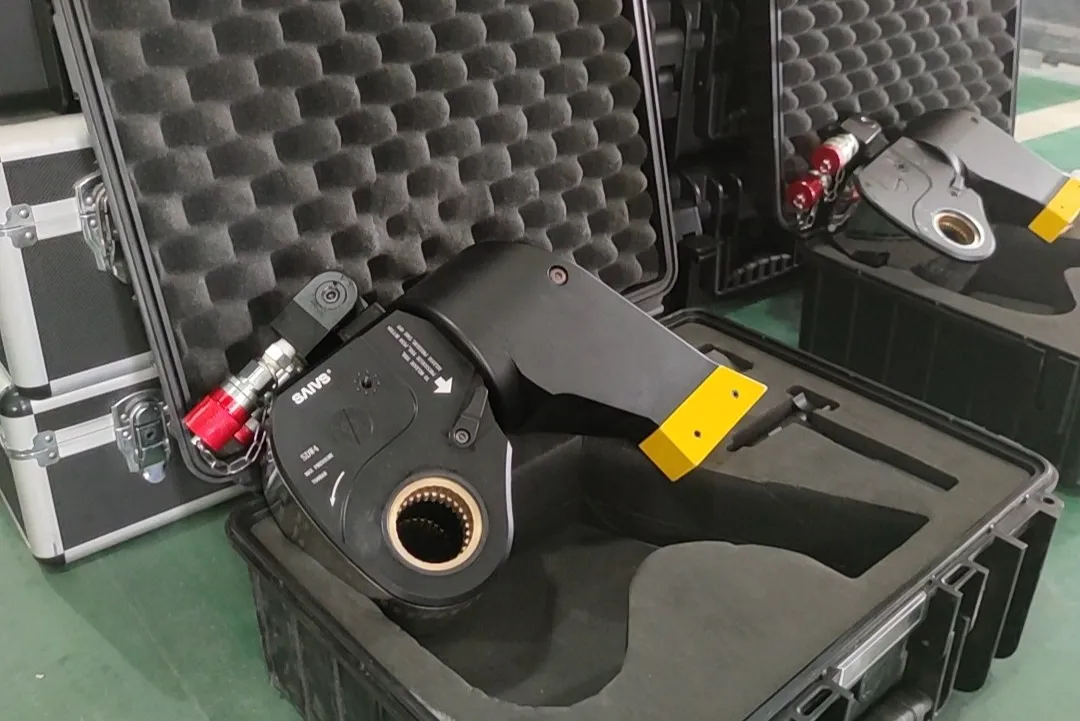
When you are working in environments like oil and gas, bridge building, or heavy equipment maintenance, the bolts are often far too large for any manual tool to handle. This is when professionals upgrade to hydraulic torque wrenches or electric torque wrenches. These tools are built with much larger drive sizes and robust internal systems to handle extreme high-pressure operations. Using the correct industrial-sized tool reduces physical operator fatigue and ensures that the large-scale connections remain stable under intense mechanical loads.
Precision in Compact Spaces
Sometimes, the challenge is not needing a larger tool, but a smaller one. Working in the cramped engine bay of a vehicle or inside a complex machinery housing requires compact torque wrenches that can fit into tight gaps. Saivs provides a variety of compact head designs, allowing you to achieve the necessary torque in areas where standard, bulky tools cannot reach. Having a range of sizes in your shop ensures that you are never stuck, no matter how difficult the access to a bolt might be.
Maintaining Performance Across All Sizes
Regardless of whether you are using a small manual wrench or a large hydraulic unit, maintenance is the key to accuracy. Every tool, regardless of size, must be stored correctly—usually by setting the spring to its lowest value after use—and must be calibrated regularly. Proper care ensures that your tools remain accurate throughout their service life. By treating every size of Saivs equipment with professional respect, you guarantee that your work will meet every safety standard required for your project.
![Image Placeholder: A technician using a compact torque wrench in a tight industrial space, demonstrating how the physical size of the tool is essential for reaching restricted fasteners.]
Achieving Excellence with Proper Tooling
Success in industrial assembly is the result of using tools that are engineered for the specific requirements of the job.
Engineering for Consistent Results
When you rely on high-precision tools, you need equipment that has been engineered to stand up to the rigors of the workplace. A well-constructed tool features clear scales, robust internal sensors, and comfortable grips that allow for steady, controlled force. Saivs focuses on providing a wide range of tool sizes that bridge the gap between industrial-grade power and laboratory-level precision, ensuring you have the reliability you need for every single connection.
Expert Support for Your Tooling Needs
Selecting the right tool size for your specific application is just as important as the tool's quality. If you are uncertain whether a 1/2" drive or a 3/4" drive tool is best for your current project, consult with experts who understand the nuances of industrial bolting. Professional guidance can help you select the equipment that maximizes both accuracy and efficiency, ensuring that your projects meet every safety standard.
Trusted Solutions for Industrial Excellence
For professionals demanding the best in measurement and assembly, Saivs offers a comprehensive range of industrial tools. Their commitment to engineering quality and reliability helps you keep your projects on track and within strict specifications. By choosing Saivs, you are investing in precision, durability, and the long-term success of your maintenance and construction operations.