Why Proper Bolt Tightening Is Critical in Industrial Equipment
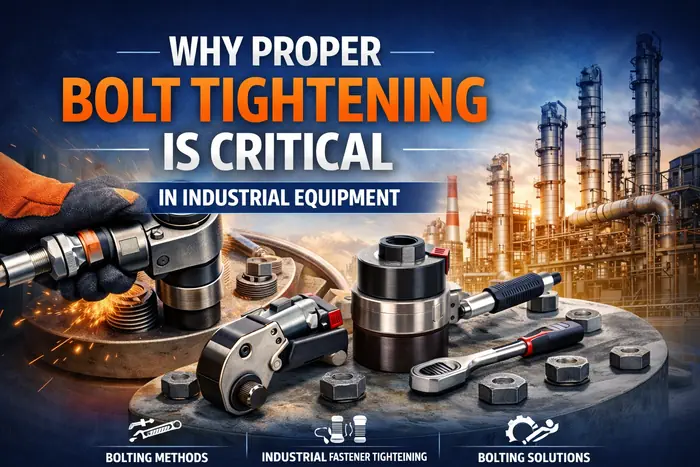
Bolted joints are widely used in industrial machinery, structural assemblies, and heavy equipment.
Although bolts appear simple, improper tightening can lead to equipment failure, safety risks, and expensive downtime.
Correct bolt tightening ensures structural stability, uniform load distribution, and long-term reliability of mechanical systems.
For industries such as energy, petrochemical, mining, and construction, professional bolting solutions play a vital role in maintaining operational safety.
The Mechanical Role of Bolt Tightening
When a bolt is tightened correctly, it generates clamping force between connected components.
This clamping force keeps parts securely compressed together.
It prevents movement, vibration damage, and separation during operation.
If tightening force is insufficient, components may loosen over time.
If excessive torque is applied, the bolt may stretch beyond its elastic limit or even break.
Accurate torque control is therefore essential for maintaining proper preload.
Load Distribution and Structural Integrity
Industrial equipment often operates under high pressure, vibration, and temperature changes.
Uniform bolt tightening distributes loads evenly across the joint.
This prevents localized stress concentration.
Uneven tightening can cause gasket leakage, flange distortion, or premature bolt fatigue.
In critical systems such as pressure vessels and pipeline connections, improper bolt tightening may result in severe safety incidents.
Common Bolt Tightening Methods Used in Industry
Different industrial applications require different tightening technologies.
Choosing the correct bolt tightening method improves accuracy and installation efficiency.
Manual Torque Wrenches
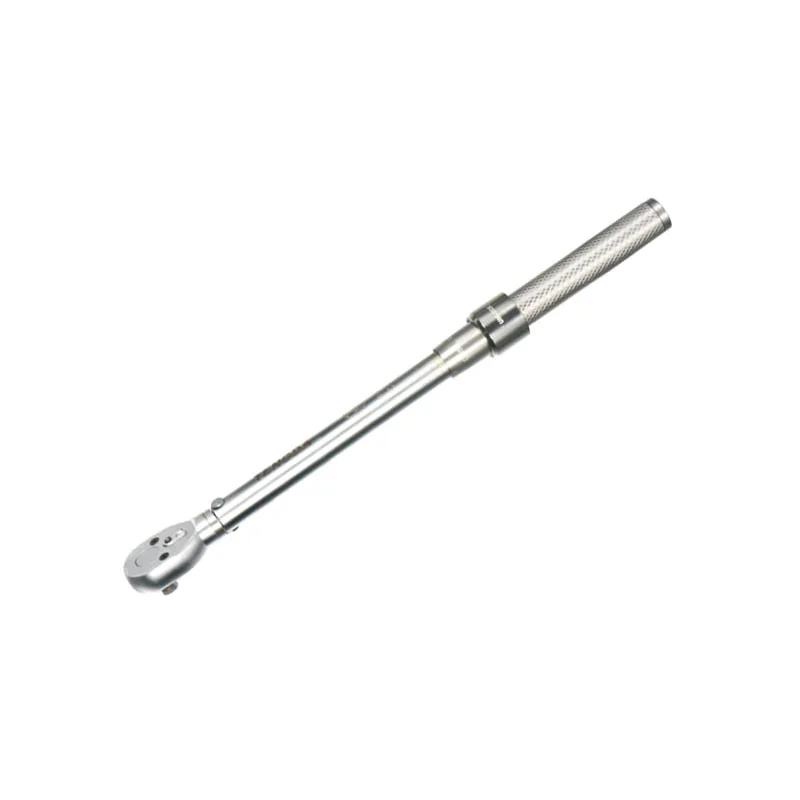
Manual torque wrenches are widely used for general maintenance work.
They provide basic torque control for moderate load applications.
However, operator skill and consistency strongly influence tightening accuracy.
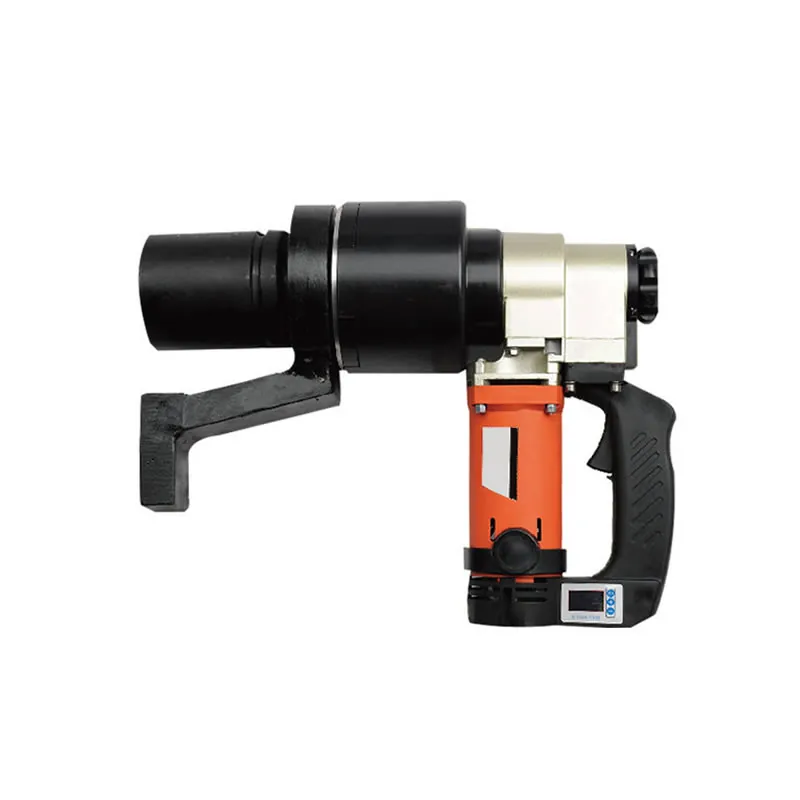
Hydraulic Torque Wrenches
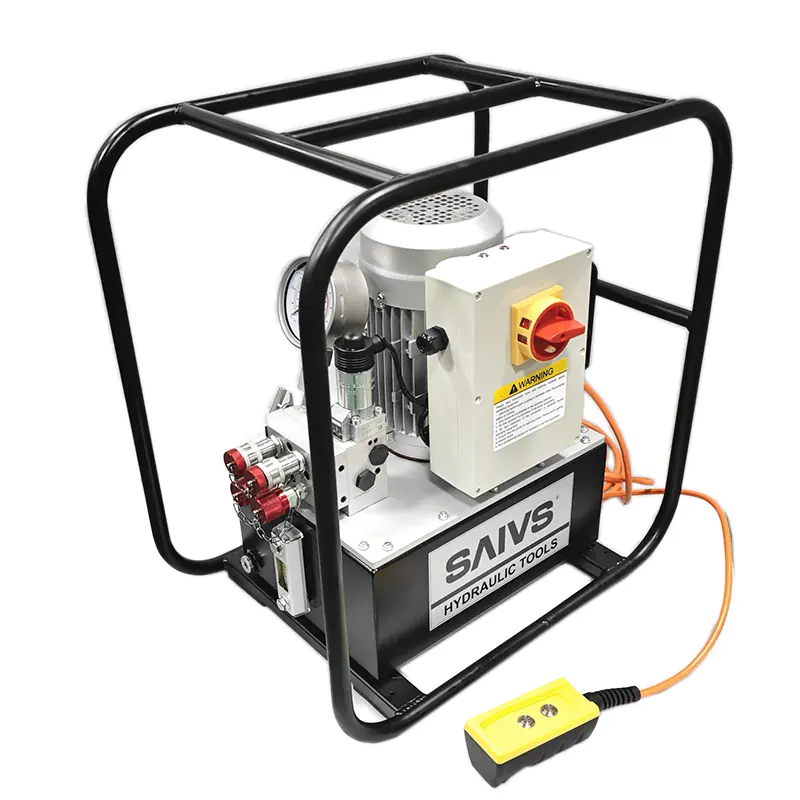
Hydraulic torque wrenches deliver precise and repeatable torque output.
They are commonly used in heavy industrial environments.
Applications include wind turbines, oil refineries, steel plants, and offshore platforms.
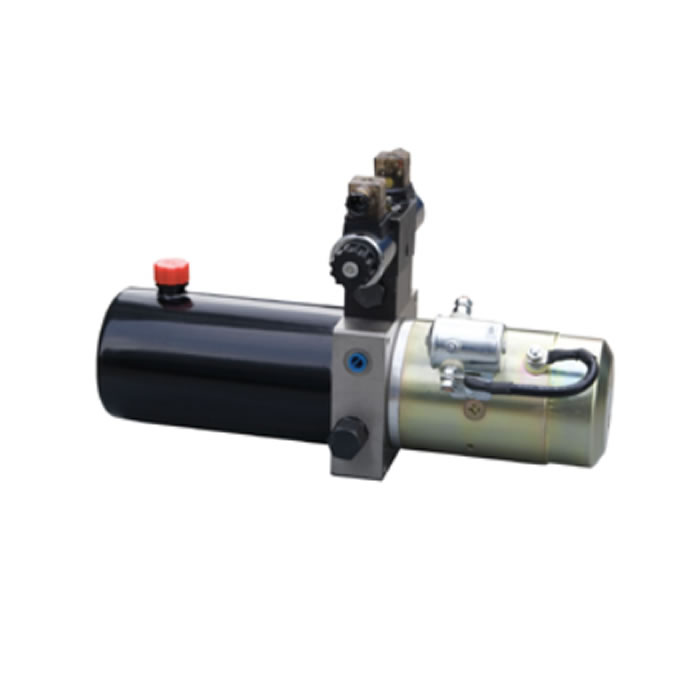
These tools generate high torque using hydraulic pressure.
This allows technicians to tighten large-diameter bolts safely and efficiently.
Hydraulic Bolt Tensioners
Bolt tensioning systems stretch the bolt directly instead of applying rotational torque.
This method produces extremely accurate preload.
It is ideal for critical flange connections and pressure equipment.
Consequences of Improper Bolt Tightening
Poor bolting practices can lead to serious mechanical and operational problems.
Even small tightening errors may escalate into major equipment failures.
Equipment Vibration and Loosening
Loose bolts allow movement between connected components.
This movement accelerates wear and increases vibration levels.
Over time, additional bolts may loosen, creating a chain reaction of mechanical damage.
Seal Failure and Leakage
Many industrial systems rely on properly tightened bolts to maintain sealing pressure.
Improper torque may cause uneven gasket compression.
This can result in fluid leakage, pressure loss, or environmental hazards.
Unexpected Equipment Shutdown
Critical equipment failures often originate from poorly tightened fasteners.
Unexpected shutdowns interrupt production and increase maintenance costs.
For large industrial facilities, downtime can result in significant financial losses.
Why Professional Bolting Solutions Matter
Modern industrial facilities increasingly rely on advanced bolting tools and controlled tightening procedures.
Professional bolting solutions improve accuracy, safety, and productivity during installation and maintenance.
High-quality hydraulic torque wrenches, bolt tensioners, and calibration systems ensure consistent tightening results.
These tools help technicians achieve the required bolt preload with minimal error.
Companies that invest in reliable bolting equipment reduce maintenance risks and extend the service life of critical machinery.
For industrial buyers seeking dependable fastening performance, selecting professional bolting tools is a strategic decision.
Conclusion
Proper bolt tightening is a fundamental requirement for industrial equipment reliability.
Accurate preload, uniform load distribution, and professional bolting tools ensure safe operation under demanding conditions.
If your projects require high-precision industrial fastener tightening or advanced bolting solutions, working with an experienced supplier can greatly improve installation efficiency and long-term equipment performance.
Contact our team today to discuss your bolting requirements and receive professional technical support for your next industrial project.