Hydraulic Torque Wrench Capacity Standards for High-Load Bolting Operations
The Role of Hydraulic Torque Wrenches in Modern Industry
In heavy industrial environments, bolted joints must withstand extreme loads.
Hydraulic torque wrenches are engineered to meet these demanding requirements.
They deliver controlled torque output that manual or electric tools cannot achieve.
Understanding hydraulic torque wrench capacity is essential for reliable bolting results.
Defining Hydraulic Torque Wrench Capacity
Hydraulic torque wrench capacity refers to the maximum torque a tool can safely apply.
This torque is generated through hydraulic pressure converted into rotational force.
Capacity ratings ensure the tool operates within structural and mechanical limits.
Torque values are typically expressed in Nm or lb-ft.
A higher-rated wrench is capable of handling larger fasteners and higher preload demands.
How Hydraulic Pressure Translates into Torque
Industrial hydraulic torque systems are designed around a 10,000 PSI pressure standard.
This pressure acts on a piston inside the wrench body.
The piston movement drives a ratcheting or cassette mechanism.
Piston Size and Mechanical Leverage
Larger pistons allow greater hydraulic force to be applied.
Extended reaction arms and gear ratios increase torque multiplication.
This combination results in higher torque capacity without increasing operator effort.
Structural Materials and Load Resistance
High-grade alloy steel is used for internal and external components.
These materials resist fatigue under repeated high-load cycles.
Robust construction prevents deformation and maintains torque accuracy.
Why Proper Torque Capacity Selection Is Critical
Operating a hydraulic torque wrench near its maximum limit increases risk.
Overloading the tool can cause seal failure or gear damage.
This shortens tool life and increases maintenance costs.
Fasteners subjected to excessive torque may stretch beyond yield strength.
This leads to joint loosening or catastrophic bolt failure.
Correct torque capacity selection protects both equipment and personnel.
Key Factors Influencing Torque Requirements
Fastener Diameter and Material Grade
Larger fasteners require exponentially higher torque values.
High-strength bolts demand precise preload control.
The wrench capacity should exceed required torque by a safe margin.
Joint Design and Application Conditions
Flange connections, structural joints, and pressure vessels require different torque profiles.
Environmental factors such as corrosion and lubrication affect torque demand.
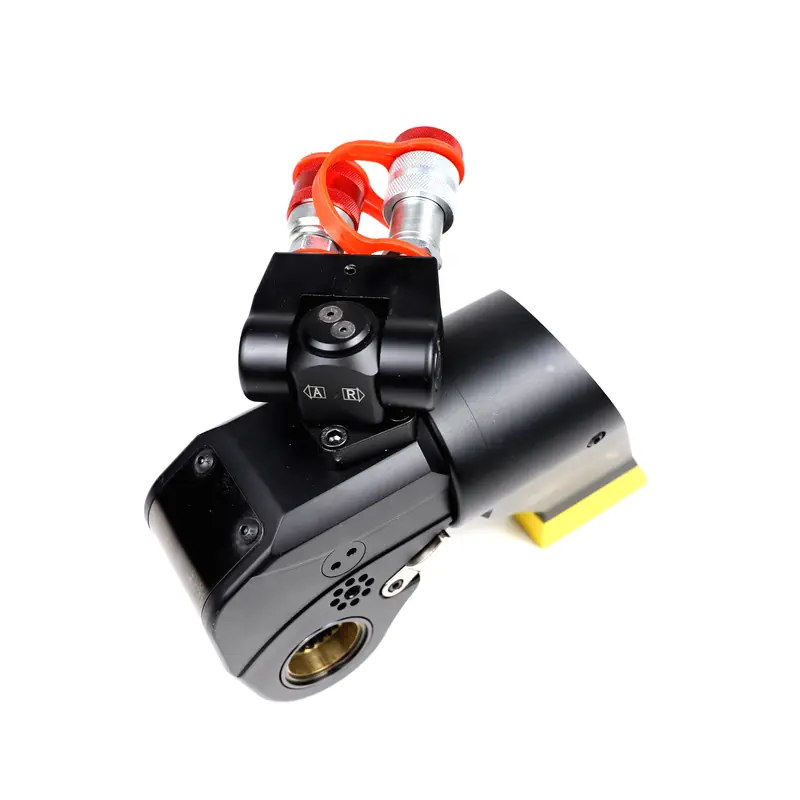
Low-clearance conditions may require compact cassette-style torque wrenches.
SAIVS Hydraulic Torque Wrenches for Industrial Performance
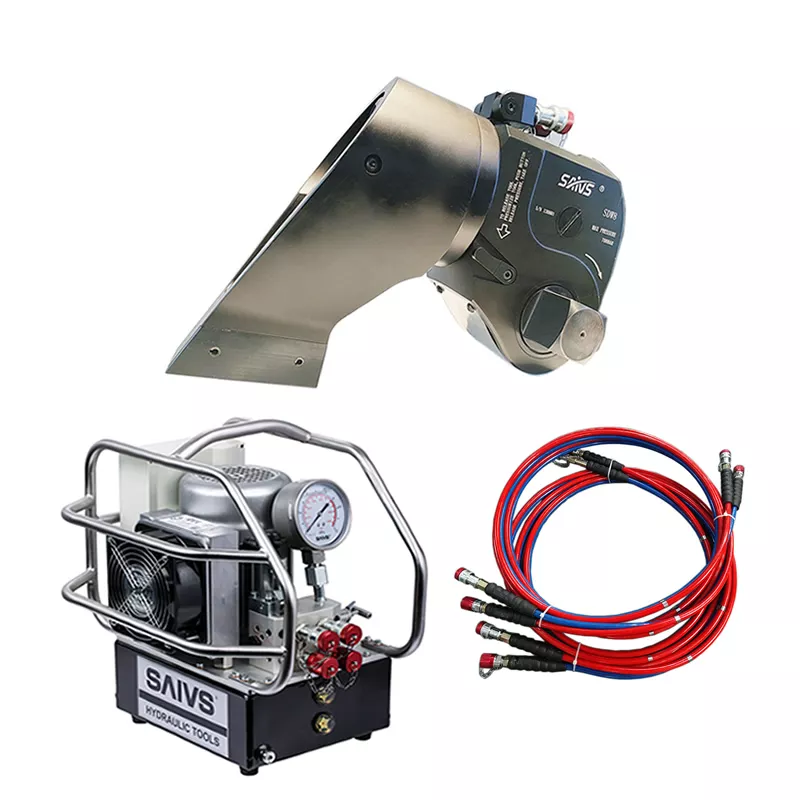
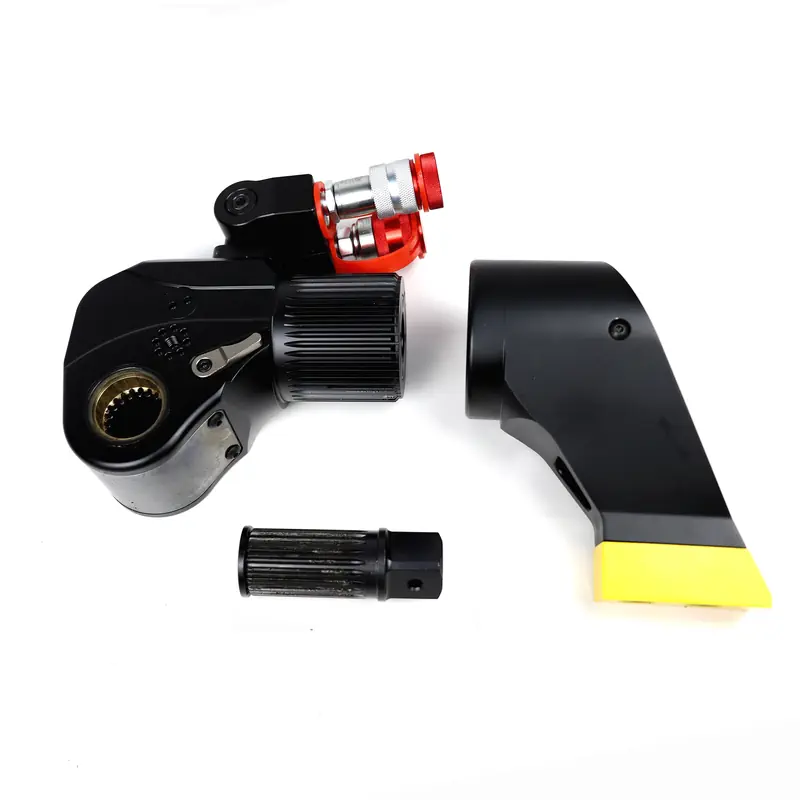
SAIVS manufactures hydraulic torque wrenches designed for high-load applications.
Each model is optimized for strength, durability, and precision.
Advanced machining ensures consistent performance under extreme pressure.
SAIVS offers a complete range of torque capacities.
From maintenance-level bolting to large-scale industrial assembly.
Both square drive and low-profile configurations are available.
Engineering Safety into Every SAIVS Tool
Safety is a critical element in hydraulic wrench design.
SAIVS integrates reinforced reaction arms and anti-slip drive mechanisms.
These features minimize unexpected movement during operation.
All SAIVS hydraulic torque wrenches are pressure tested before shipment.
This guarantees stable performance at rated capacity.
Clear torque charts support accurate field operation.
Benefits for Industrial Buyers and Contractors
Choosing SAIVS means investing in long-term reliability.
Factory-direct manufacturing allows competitive pricing.
Consistent quality reduces downtime and replacement costs.
Our technical support team assists with capacity selection.
This ensures the right tool is matched to each bolting application.
Proper selection improves efficiency and joint integrity.
Conclusion: Capacity Knowledge Drives Better Bolting Results
Hydraulic torque wrench capacity is a foundation of safe industrial bolting.
Understanding torque limits protects tools, fasteners, and operators.
It also improves consistency across critical bolted joints.
SAIVS provides engineered hydraulic torque solutions for demanding industries.
Our focus on capacity, strength, and safety delivers real-world value.
With SAIVS, industrial bolting tasks are completed with confidence and precision.