How to remove tension control bolts?
In structural steel construction, bridge building, and heavy architectural framing, Tension Control (TC) bolts—also known as twist-off or shear bolts—are widely recognized for fast, visually verifiable installation. Designed with a round dome head and a splined tip that snaps off when proper tension is achieved during tightening, these fasteners present a unique challenge when it comes time for maintenance, structural modifications, or disassembly.
Many technicians, ironworkers, and site supervisors often ask: how do you remove tension control bolts once the installation spline has already been sheared off? Understanding the proper removal techniques and specialized tools prevents structural flange damage and ensures safe, efficient job site operations.
Understanding the Structure of a Installed TC Bolt
Before attempting removal, it is important to understand why TC bolts cannot be uninstalled using standard TC shear wrenches.
During initial installation, a specialized electric TC wrench grips both the inner spline and outer nut simultaneously, turning the nut until the precise torque-tension threshold is met and the spline snaps off. Once installed, the bolt head remains a smooth, round dome with no hex drive, flat faces, or internal socket, and the protruding thread end no longer has a spline to grip. Because there is no spline left to hold the bolt shaft from spinning, standard disassembly requires alternative approaches.
Primary Methods for Removing TC Bolts
Depending on joint access, bolt size, and whether surrounding steel plates must be preserved, ironworkers rely on several proven removal methods.
1. Removing via the Nut (Standard Disassembly)
In most structural steel connections, the nut remains fully accessible and intact.
Using a Heavy-Duty Impact Wrench: The primary method for removing a TC bolt is applying a high-torque impact wrench directly to the hex nut. The rapid hammering action of an impact tool helps break the thread friction without needing to hold the smooth dome head on the opposite side.
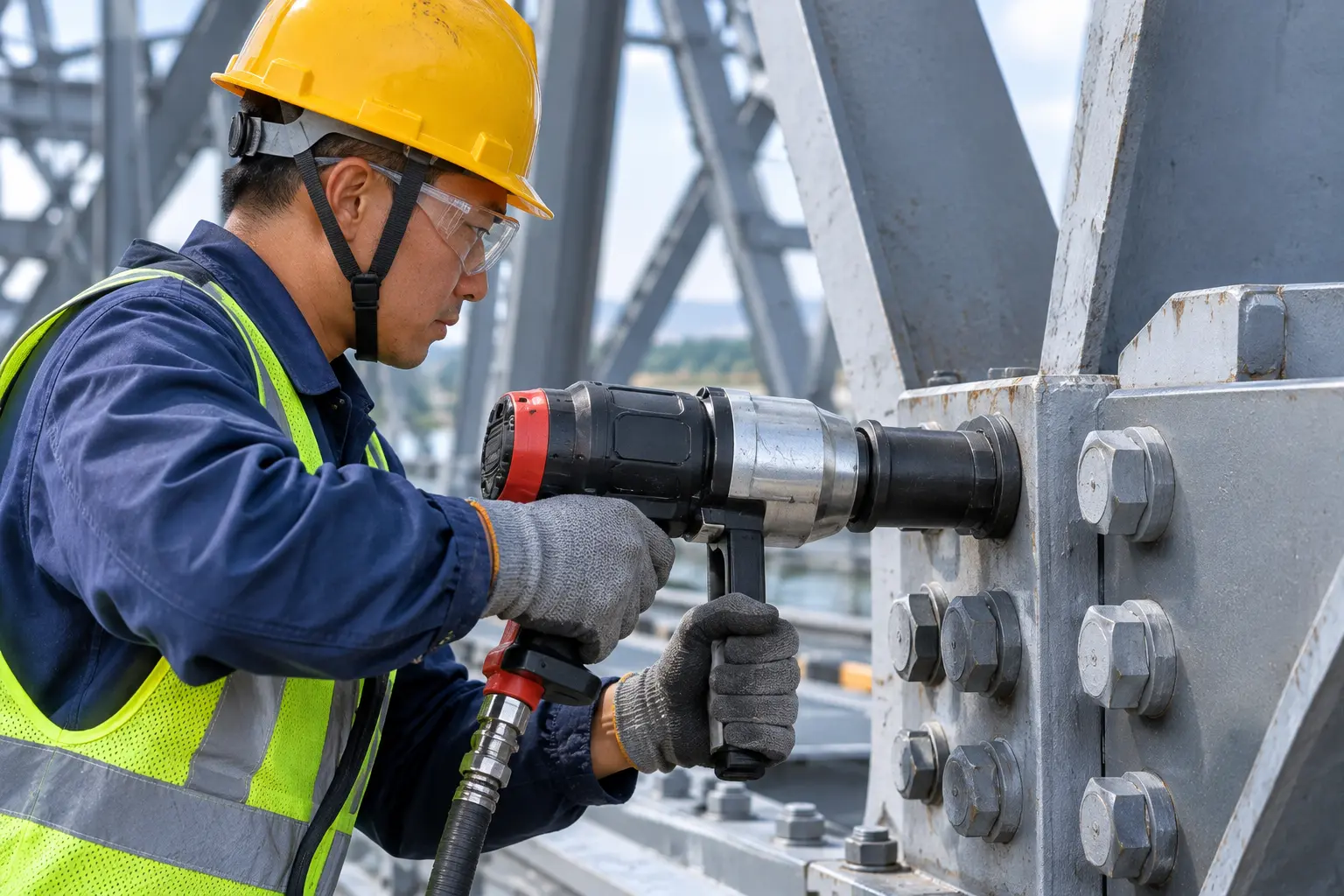
Using a Heavy-Duty Manual or Hydraulic Torque Wrench: If an impact driver is unavailable or space is restricted, a heavy-duty manual torque wrench or high-power Hydraulic torque wrench paired with a backup locking plier or wedge on the dome head can break the initial thread bind.
Applying Penetrating Lubricant: Spraying high-grade penetrating fluid onto exposed threads before attempting removal significantly reduces break-out torque and prevents thread galling.
2. Using a Nut Splitter (Non-Thermal Mechanical Removal)
When nuts are rusted, seized, or over-torqued beyond the reach of standard wrenches, cutting the nut mechanically is the safest option.
Hydraulic Nut Cutters: Technicians place a compact hydraulic nut splitter over the hex nut. Pressurized fluid from a hydraulic pump drives a hardened steel chisel through the side of the nut, splitting it in half without damaging the structural plate or surrounding steel frame.
3. Thermal and Cutting Torch Removal
In heavy demolition or structural teardowns where fasteners will not be reused:
Oxy-Fuel or Plasma Torch Cutting: The nut or smooth dome head is sliced off using a precision cutting torch, allowing the remaining stud shaft to be driven out of the bolt hole with a punch and hammer. Care must be taken to avoid gouging the structural base steel.
Safety Precautions and Best Practices
Removing high-tension structural fasteners requires strict adherence to job site safety protocols.
Managing Stored Elastic Tension
TC bolts are installed under extreme tension (often reaching tens of thousands of pounds of clamping force). When breaking the nut loose, the stored kinetic energy can cause sudden tool kickback or cause loose washer debris to fly off. Always wear safety glasses, heavy leather work gloves, and protective headgear during removal operations.
Replacing Removed Fasteners
Tension control bolts are single-use fasteners. Once a TC bolt has been installed, tensioned, and removed, its shank has undergone permanent material elongation (plastic deformation). Never re-install a used TC bolt. Always replace removed hardware with brand-new, factory-certified assemblies.
Achieving Excellence with Professional Equipment
Success in structural steel assembly and maintenance relies on selecting robust tools and maintaining them with high-quality supplies engineered specifically for the demands of your trade.
Engineering for Consistent Results
When operating high-torque or high-pressure industrial equipment on structural job sites, you need tools built for extreme durability and effortless serviceability. Heavy-duty housing designs, precision internal machining, and high-grade alloy materials ensure reliable performance under continuous heavy loads. Saivs focuses on providing high-grade bolting solutions—from manual torque wrenches to heavy-duty hydraulic tools—that stand up to demanding job site environments, giving you dependable results every single time.
Expert Support for Your Tooling Needs
Selecting the ideal removal equipment, understanding bolt tension dynamics, or establishing routine maintenance protocols requires a clear understanding of structural engineering. If you need assistance with equipment selection, specialized bolting tools, or troubleshooting, consult with experts who understand industrial bolting. Professional guidance ensures that your hardware investments protect your operational safety and efficiency.
Trusted Solutions for Industrial Excellence
For professionals demanding the best in measurement, assembly, and maintenance tools, Saivs offers a comprehensive range of industrial equipment. Their commitment to engineering quality and reliability helps keep your construction and maintenance projects running smoothly without unexpected delays. By choosing Saivs, you invest in durability, precision, and long-term industrial success.